miércoles, 13 de julio de 2011

Cowboys

History Of Cowboys:
A cowboy is an animal herder who tends cattle on ranches in North America, traditionally on horseback, and often performs a multitude of other ranch-related tasks. The historic American cowboy of the late 19th century arose from the vaquero traditions of northern Mexico and became a figure of special significance and legend. A subtype, called a wrangler, specifically tends the horses used to work cattle. In addition to ranch work, some cowboys work for or participate in rodeos. Cowgirls, first defined as such in the late 19th century, had a less-well documented historical role, but in the modern world have established the ability to work at virtually identical tasks and obtained considerable respect for their achievements. There are also cattle handlers in many other parts of the world, particularly South America and Australia, who perform work similar to the cowboy in their respective nations.
The cowboy has deep historic roots tracing back to Spain and the earliest European settlers of the Americas. Over the centuries, differences in terrain, climate and the influence of cattle-handling traditions from multiple cultures created several distinct styles of equipment, clothing and animal handling. As the ever-practical cowboy adapted to the modern world, the cowboy's equipment and techniques also adapted to some degree, though many classic traditions are still preserved today.

Large numbers of cattle lived in a semi-feral, or semi-wild state on the open range and were left to graze, mostly untended, for much of the year. In many cases, different ranchers formed "associations" and grazed their cattle together on the same range. In order to determine the ownership of individual animals, they were marked with a distinctive brand, applied with a hot iron, usually while the cattle were still young calves. The primary cattle breed seen on the open range was the Longhorn, descended from the original Spanish Longhorns imported in the 16th century, though by the late 19th century, other breeds of cattle were also brought west, including the meatier Hereford, and often were crossbred with Longhorns.


miércoles, 6 de julio de 2011

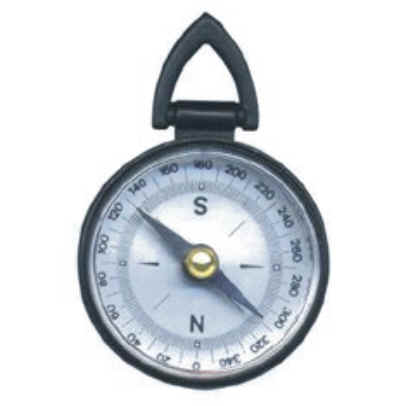
Compasses


Compasses Up:
  • The simplest consists of a magnetized needle suspended on a graduated circle (very cheap) 

  • This same compass needle can be suspended in liquid, which results in a higher precision. 


Compasses Cartographic:
  • Transparent Plate.
  • Plate with lid and mirror.
Special Compasses:

Naúticas
Militares
Topográficas
Geológicas
Forestales
Digital Compass

miércoles, 15 de junio de 2011

Relief Map

What is a relief map? Is a three-dimensional representation, usually of terrain. When representing terrain, the elevation dimension is usually exaggerated by a factor between five and ten; this facilitates the visual recognition of terrain features.

What are features?
The features module enables the capture and management of features in Drupal. A feature is a collection of Drupal entities which taken together satisfy a certain use-case.

How do we measures sea levels?
With satellites and tide gauges. Satellites can record the level of oceans around the globe, while tide gauges are used to measure the height of water with respect to a fixed, nearby point on land. Oceanographers combine data from satellites and tide gauges to study global effects, like the rise in average sea level that results from climate change. But specific information about local features, like the relative depth of certain parts of New Orleans, derives from specific tidal-gauge readings. (Land can also rise and fall over long time periods, so changes in land level must also be taken into account.)

5 Cities above sea level In North America:
  • Death Valley

  • Compasses:


    Maps:

    miércoles, 1 de junio de 2011

    Unit 3

    Native Americans:
    1. What do you think means The River Had Brought Tomorrow?  I think it means that good thing will gonna hapend tomorrow, bad things got in the past and better things will happend in the future.

                                         
                                        Shoshone people:


    Heebe-tee-tse, Shoshone Indian, photograph by Rose & Hopkins, c. …
[Credit: Library of Congress, Washington, D.C.; photograph, Rose & Hopkins (neg. no. LC-USZ62-102137)]Shoshone, also spelled Shoshoni; also called SnakeNorth American Indian group that occupied the territory from what is now southeastern California across central and eastern Nevada and northwestern Utah into southern Idaho and western Wyoming.
    Early 21st-century population estimates indicated some 41,000 descendants of the four Shoshone groups.


                                            Explorers:

    They like curiosity, their work its very dangerous because they can loose their life.
    Also they explore without fear, these men are brave, courage and strong people.

    jueves, 26 de mayo de 2011

    Moving Through Time

     Moving Through Time:

    The world has been changed all the time, the artist and movie actors like to change the world. Today it may seem strange that Eadweard Muybridge to take photographs everyday event. But in 1887 there were no movies, no televisions, no tecnology.

    When a person take a picture with a camera, a person reel the circle the person would blend together in what looked like a moving picture.


    Apply What You Learned: 

    1. The idea was to entertain the people.
    2. I would like to do a Double Portrait artwork.
    3. The different position of the characters.


    miércoles, 25 de mayo de 2011

    Harlem

     Harlem:

    Harlem is a neighborhood in the New York City borough of Manhattan, which since the 1920s has been a major African-American residential, cultural, and business center. Originally a Dutch village, formally organized in 1658, it is named after the city of Haarlem in the Netherlands. Harlem was annexed to New York City in 1873.

    New York's revival in the late 20th century has led to renewal in Harlem as well. By 1995, Harlem was experiencing social and economic gentrification. Though the percentage of residents who are black peaked in 1950, the area remains predominantly black.


    miércoles, 4 de mayo de 2011

    Intersection In New York City(Fifth Avenue and Broadway)

    New York City:

    Fifth Avenue is a major thoroughfare in the centre of the borough of Manhattan in New York City, USA. The section of Fifth Avenue that cross Midtown Manhattan especially that between 49th street and 60th, is lined with prestigious shops and is considered the most expensive shopping streets in world. 
    Past:                                                                 

     Now:


    What is the problem that people find in the intersection?
    One of the problems is that is heavy traffics there and you have to suffered when you pass the intersection.

    Why is it intersection dangerous?
    Because there are a lot of heavy traffic and if would be an accident the ambulance wouldnt get there in time.And there are a lot of people and you get lost.